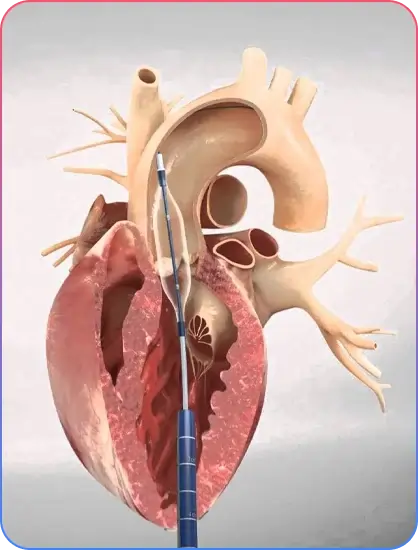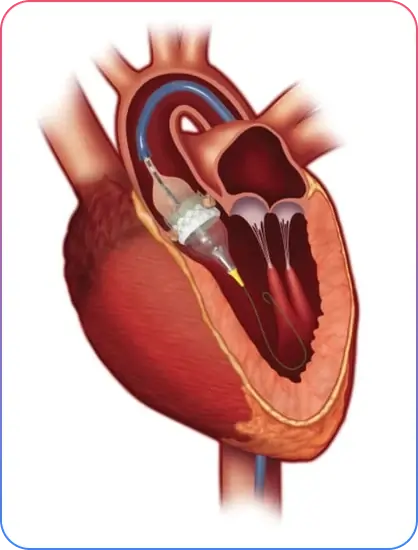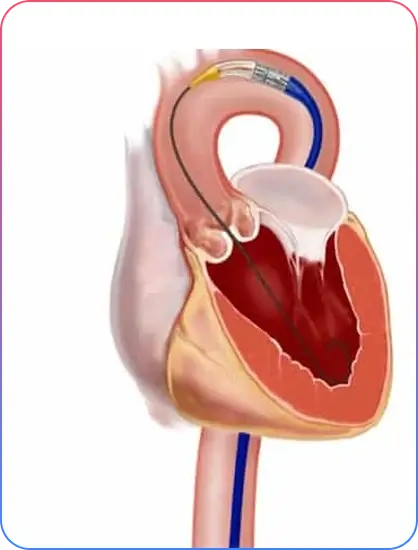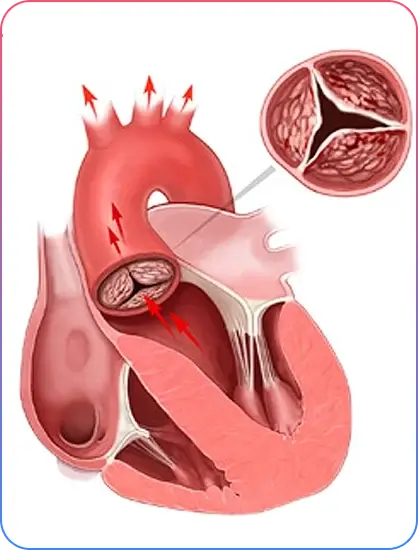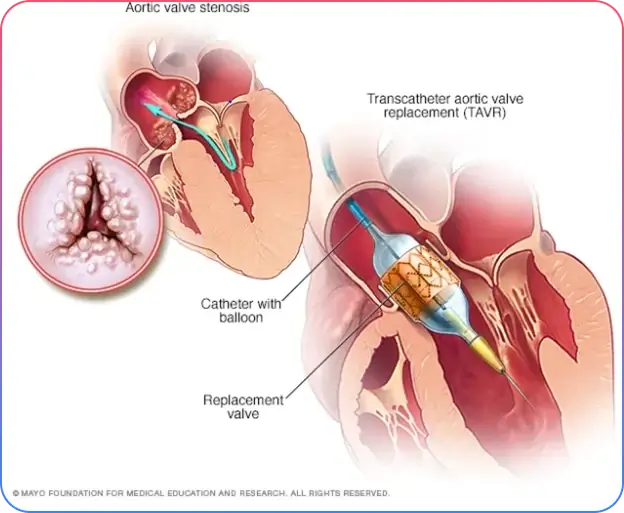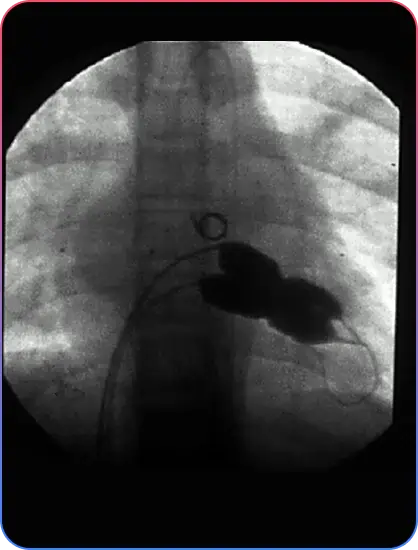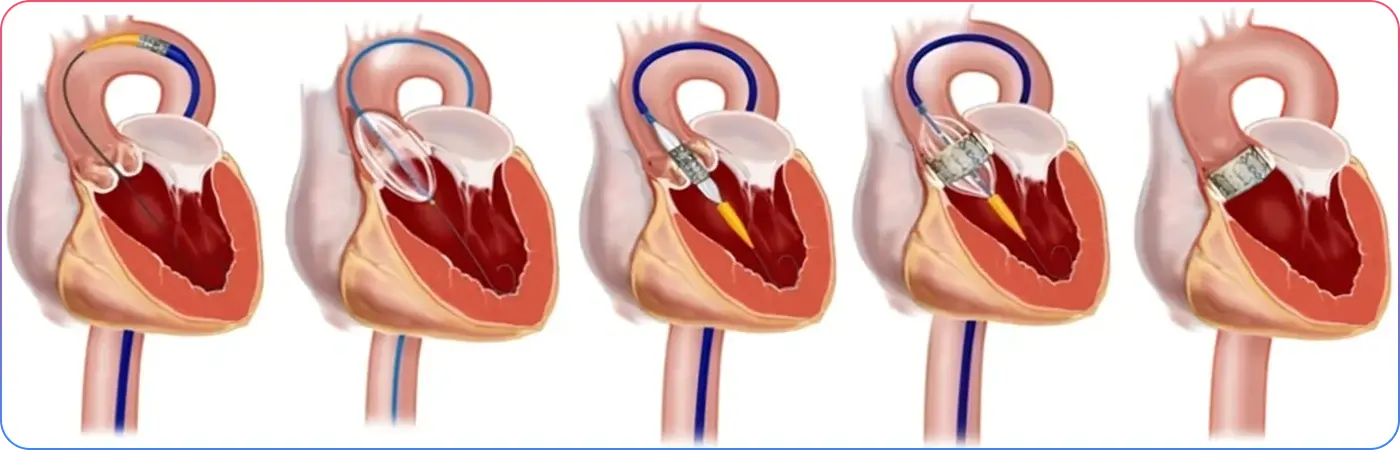
A transfemoral approach is done through a small incision in the skin at the top of your thigh (groin), and the catheter goes into your femoral artery. The doctor uses a dye and a specialized X-ray (fluoroscopy) to guide the new valve through the catheter to the diseased valve.
The procedure is done using conscious sedation. This is the most commonly used approach, and about 90% of TAVR patients have a transfemoral procedure.
The transapical approach is done through a 4-inch incision between the ribs. The new valve is inserted through the incision and placed directly inside the diseased aortic valve.
The doctor uses a dye and a specialized X-ray (fluoroscopy) to guide the new valve to the diseased valve. The procedure is done using general anesthesia while the patient is asleep.
The direct aortic approach is done through a J-shaped incision at the top of the breast bone (sternum). The catheter is guided into the aorta and the valve is put in place.
The procedure is done under general anesthesia.
The subclavian approach is done through a small incision near the shoulder, and the catheter goes into the subclavian artery.
The new valve is guided through the artery into the aorta and put in place. This procedure may be done with general anesthesia or conscious sedation.