FRACTIONAL FLOW RESERVE
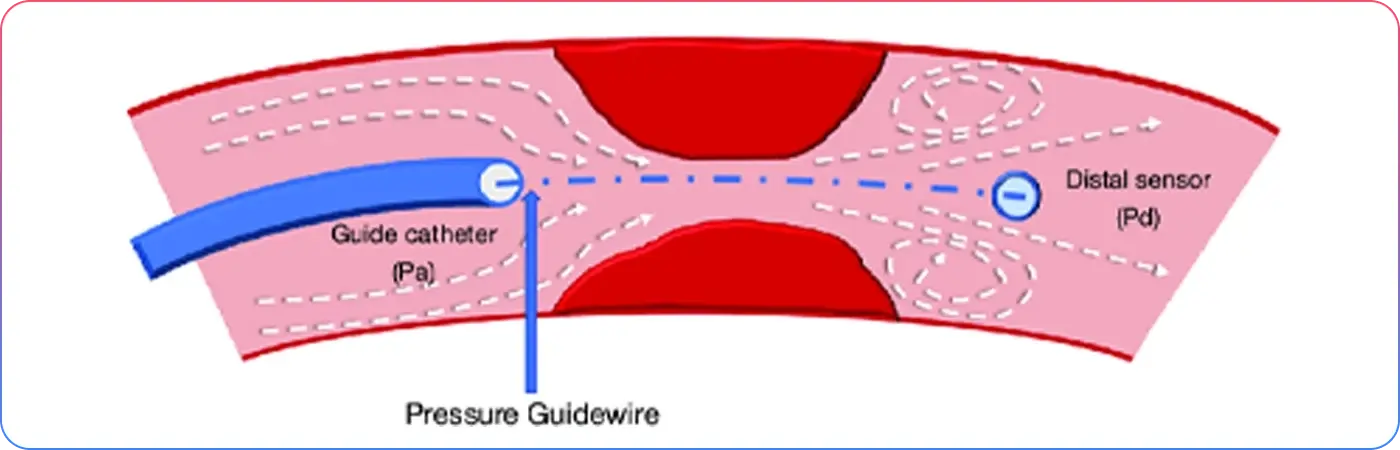
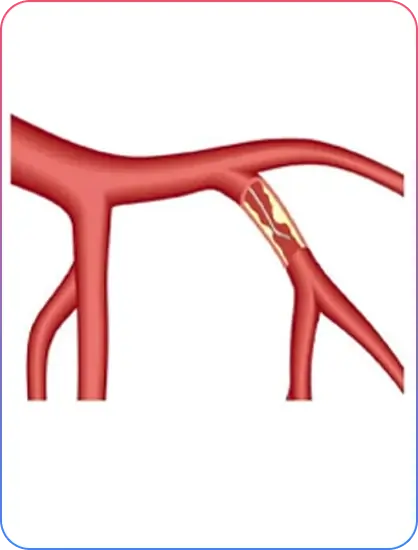
Fractional Flow Reserve (FFR) is a specialized technique used during coronary catheterization to measure pressure differences across a coronary artery stenosis. This helps determine whether the narrowing is significantly reducing oxygen-rich blood flow to the heart muscle.
FFR provides accurate information about the severity of coronary artery blockages and helps cardiologists decide whether procedures such as angioplasty or stent placement are necessary. The procedure is minimally invasive and is performed using a pressure-sensitive guidewire during coronary angiography.
This technique plays an important role in identifying functionally significant blockages and improving treatment outcomes while avoiding unnecessary interventions.
Indications
- Multivessel disease
- Acute coronary syndrome
- Left main lesions
- Bifurcation lesions
- Bypass graft assessment
During coronary catherization
- A catheter is inserted into the femoral or radial arteries
- A sheath and guidewire
- FFR uses a small sensor on the tip of the wire
- To measure pressure, temperature and flow
- Which determines the exact severity of the lesion
- Done during maximal blood flow
- Induced by products such as adenosine or papaverine
- Wire is pulled back
- Pressures recorded across the vessel

Equation
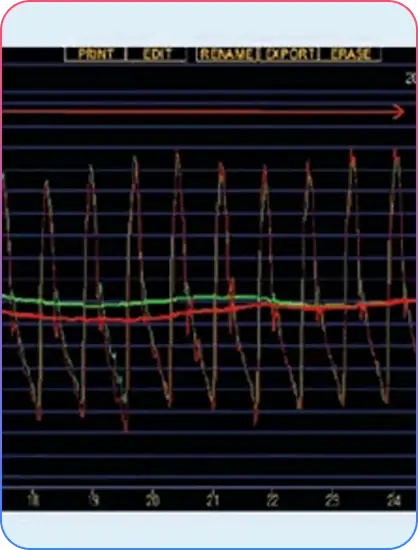
- FFR is the ratio of maximum blood flow distal to a stenotic lesion to normal maximum flow in the same vessel.
- It is calculated using the pressure ratio.
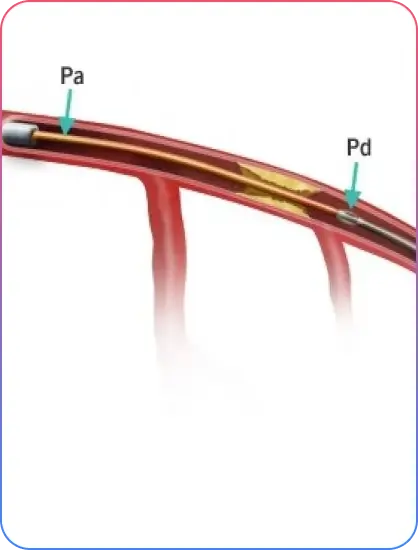
- Pd = Pressure distal to the lesion
- Pa = Pressure proximal to the lesion
Equipment
- Guiding catheter
- Pressure monitoring guidewire
- Hyperemic stimulus
- Vasodilation administration – to achieve maximal hyperemia of coronary artery
Complications: Rare
- Transient bradycardia (1.7%)
- Coronary spasm (2%)
- Ventricular fibrillation (0.2%)
- Vessel trauma