- Types of Complex CADs
- Balloon angioplasty
- Carotid artery angioplasty
- Cerebral angioplasty
- Coronary artery stent
- Lasar angioplasty
- PTA of the femoral artery
Complex Coronary Angioplasties
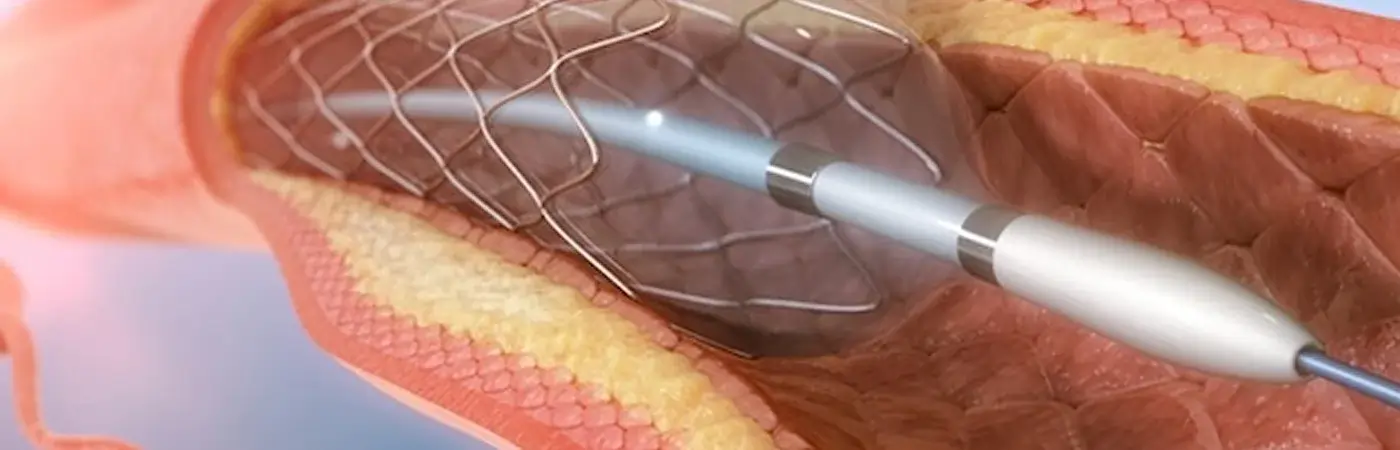
Complex Coronary Angioplasty is indicated for patients who have undergone coronary artery bypass surgery. Angioplasty is a medical procedure used to dilate the narrowed arteries supplying blood to the heart. This is accomplished by inflating a small balloon inside the artery to dilate the vessels and increase the blood flow to the heart. The arteries that carry blood from the heart to different parts of the body are blocked by fatty substances called plaque that restrict blood flow to the heart. During angioplasty, the stents are placed in the coronary artery to widen the passage of the blood vessels and improve the blood supply to the heart.
Procedure
- Angioplasty is performed by a specialist in the cardiac catheterization laboratory of the hospital under local anesthesia and IV sedation.
- You will be made to lie comfortably on your back on an X-ray table.
- The area of catheter insertion, either the groin or arm, is shaved, disinfected, and a local anesthesia is injected to numb the area.
- Your physician will initially perform an angiogram to determine the extent and location of blockage within the coronary arteries.
- A tiny cut is made over the insertion site, and a small tube called a sheath is inserted into an artery in the groin.
- A flexible tube called a catheter is passed through the sheath and advanced under X-ray guidance to reach the blocked area.
- Once the blocked area is reached, a special dye is injected through the catheter, and X-ray images are taken to assess the blockage.
- A guide wire is inserted through the catheter and advanced across the blockage.
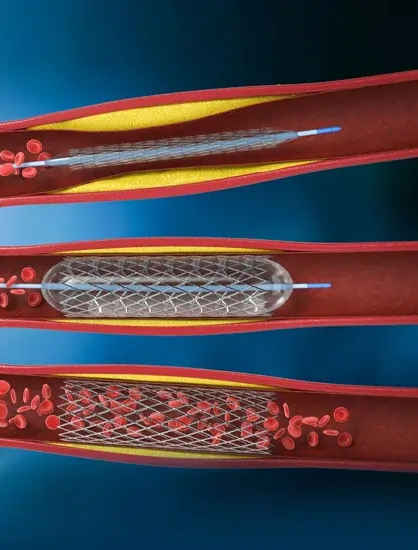
- A catheter with a deflated balloon at its end is threaded over the guide wire into the blockage.
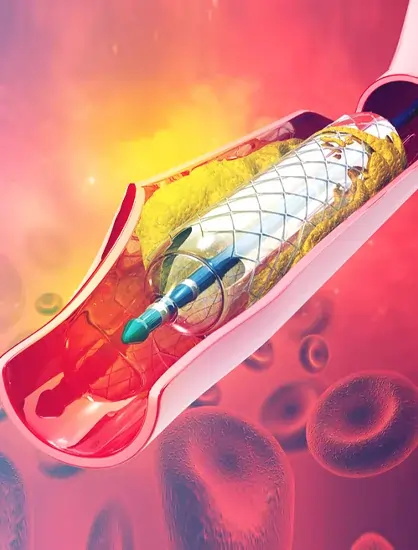
- The balloon is inflated to push the plaque against the artery walls, opening the blocked artery and increasing blood flow to the heart.
- In many cases, a wire mesh stent is placed within the artery to help keep it open.
- After confirming successful dilation, the balloon, guide wire, and catheter are withdrawn while the stent remains in place.
- Pressure is applied to the insertion site for about 15 minutes, followed by a tight pressure bandage to prevent bleeding.

Risk Factors
- Bleeding from the insertion site
- Irregular heartbeat
- Chest pain
- Blood vessel damage from the catheter requiring surgery for repair
- Kidney damage from the dye used during the angiogram
- Restenosis, which usually occurs within 6 months and involves re-accumulation of plaque or scar tissue causing narrowing or blockage of the coronary artery
- Blood clot formation
- Dislocation of the stent