Chronic Total Occlusions

Chronic Total Occlusions

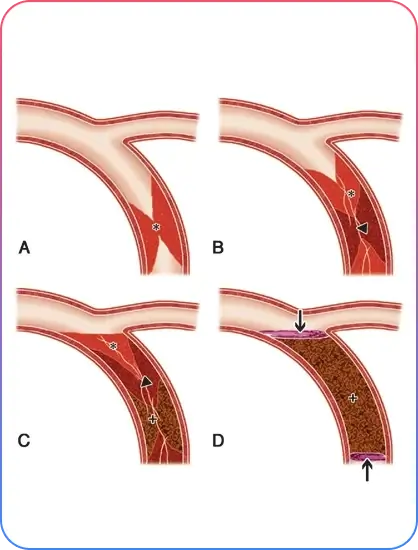
Chronic total occlusion is a complete or nearly complete blockage of one or more coronary arteries either the left main or right coronary artery. One of the arteries that delivers oxygen-rich blood to your heart has become completely blocked or occluded for three months or longer buildup of plaque within a coronary artery. When this happens, blood flow to the heart is compromised. CTO is a common heart disorder in patients with coronary artery disease.Between 20 and 25 percent of patients with coronary artery disease also have a chronically blocked artery.

Without treatment a CTO can lead to:

  • Chest pain (called angina)
  • Shortness of breath
  • Fatigue
  • Inability to participate in many normal daily activities

  • Cigarette smoking
  • Family history of heart disease
  • Age above 45 years for men and 55 years for women
  • Smoking
  • High cholesterol
  • Diabetes
  • High blood pressure
  • History of heart attack or known coronary artery disease

  • Acute ST-elevation myocardial infarction (STEMI)
  • Chest discomfort
  • Shortness of breath
  • Dizziness
  • Fatigue
  • Nausea
  • Pain in the upper body or arm
  • Rapid or irregular heartbeat

Obstructive Coronary Artery Disease

Diagnosis of CTO is based on:

  • Patients’ medical history
  • Physical examination: Complete auscultation of the heart and lung sounds together with assessment for heart failure signs including jugular venous distention, Kussmaul sign, hepatojugular reflex, ascites, and peripheral edema.
  • Coronary angiogram procedure: During this procedure, contrast material is injected into the coronary arteries and pictures are taken to identify blockages and assess heart muscle and valve function.
  • EKG
  • Echocardiogram (ECG)
  • Stress test
  • Nuclear medicine PET scan
  • Cardiac MRI
CTO Risk Factors Symptoms and Diagnosis
Left Main Bifurcation Procedure

Pathophysiology

Pathogenesis of coronary artery disease which can progress to CTO lesions, has multiple contributing factors, which include upregulation of the immunologic and inflammatory markers (cytokines, leukocytes, high sensitivity C-reactive protein), endothelial dysfunction, and cholesterol accumulation. Most commonly, it starts with the collection of smooth muscle cells within the intima, and this progresses to macrophages accumulating in the intima leading to pathologic intimal thickening and progression of lesions.

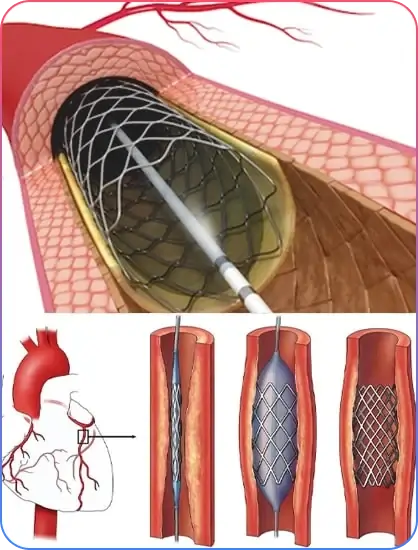
CTO PCI Procedure

  • Most patients with a symptomatic total coronary occlusion traditionally required coronary artery bypass graft (CABG) surgery to treat the blockage.
  • Total blockages of the coronary artery have historically been among the most challenging lesions to treat with interventional procedures.
  • New technology and advanced percutaneous techniques now allow experienced physicians to significantly improve success rates, making PCI a viable treatment option for symptomatic patients.
  • Calcification within a chronic total occlusion (CTO) is an independent predictor of PCI failure, prolonged procedure duration, suboptimal stent expansion, and complications.
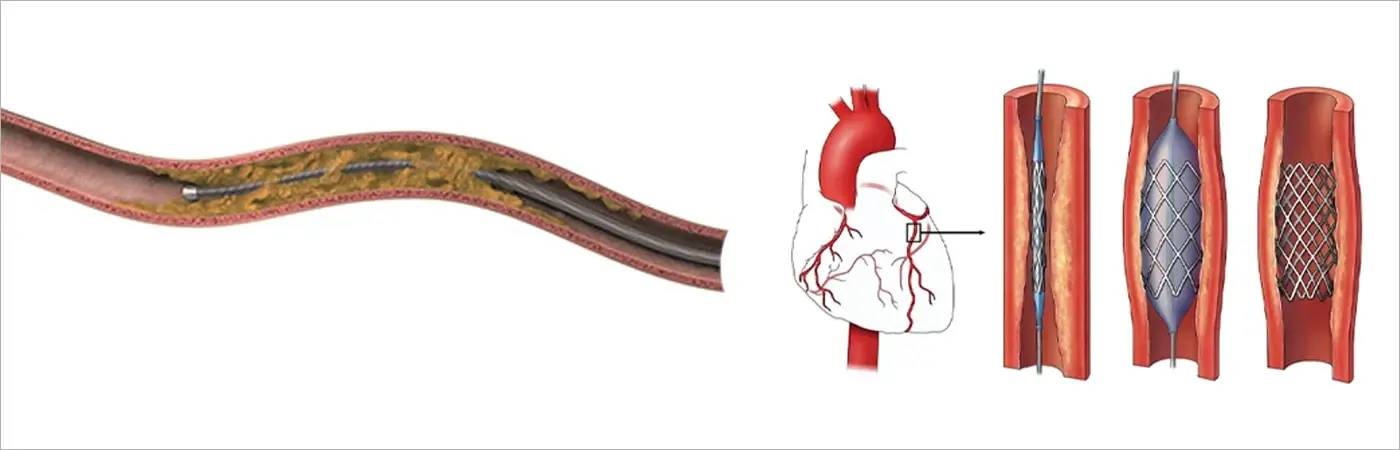
  • CTO can be crossed by luminal tracking (intraplaque) or by dissecting around the occlusion through the less resistant subintimal space (extraplaque).
  • These approaches can be performed antegradely using antegrade wiring (AW) or antegrade dissection re-entry (ADR).
  • Retrograde techniques include retrograde wiring (RW) or retrograde dissection re-entry (RDR).
  • Calcium modification is often required, especially when the course is intraplaque.
  • Plaque calcium morphology may be concentric, eccentric, or nodular, while extraplaque tracking can create a calcified pseudonodule.
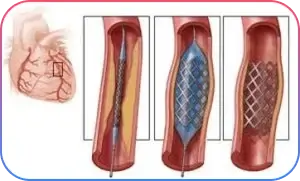
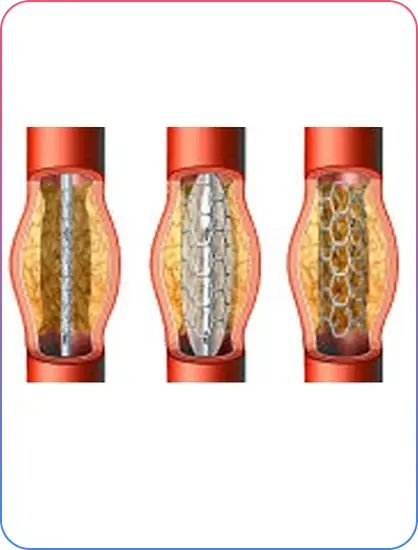
  • Calcium modification during CTO PCI is frequently performed using scoring balloons (SB), cutting balloons (CB), high-pressure (OPN) balloons, rotational atherectomy (RA), orbital atherectomy, or laser atherectomy.
CTO PCI Procedure
During CTO PCI Procedure

During the Procedure

  • At the start of the procedure, patients receive sedation.
  • During the procedure, two catheters are placed in arteries through the leg or wrist to allow forward or backward access as needed.
  • Cardiac interventionists use specialized guide wires and catheters that are carefully steered across total blockages.
  • The fine movement of the guide wire tip is easier to control compared to previous guide wire designs.
  • At select centers in the United States, including the Cleveland Clinic, physicians may use a retrograde approach in which total coronary blockages are accessed through collateral blood vessels.
  • Collateral blood vessels are newly formed vessels that reroute blood flow around a blockage and develop as blockage severity increases.
  • During the procedure, the patient may be awakened and encouraged to speak with the doctor if any discomfort occurs.
  • The procedure generally takes approximately 3 to 4 hours.
  • First-time success rates are approximately 85% to 90%.
  • In some cases, partial success occurs and patients may be advised to undergo a repeat attempt after 6 to 8 weeks.
  • Most patients are discharged the following day after evaluation of catheter insertion sites and blood test results.

Results

  • Patients who undergo CTO PCI often experience improvement in symptoms within days to weeks.
  • Some patients notice improvement even before discharge.
  • Studies have shown that patients who undergo CTO PCI may experience improvements in quality of life, including:
    • Reduced chest pain (angina)
    • Reduced shortness of breath
    • Increase in physical activity
    • Decrease in feelings of depression
    • Higher energy levels
  • The Mass General CTO PCI team will arrange post-procedure follow-up care.
CTO PCI Results

Success Rate

  • CTO PCI success rates in experienced centers range from 60% to 90%.
  • The retrograde approach may have potential complications, but the complication rate is only slightly higher than standard angioplasty depending on the clinical situation.
  • Each patient is carefully evaluated to determine the most appropriate treatment option based on:
    • Type of cardiovascular disease
    • Location of the disease
    • Patient’s age
    • Co-existing medical conditions

Patient Education

  • Contact your doctor if you experience:
    • Swelling
    • Intense pain
    • Infection
    • New rash
    • Skin damage
  • Do not lift heavy weights
  • Quit smoking
  • Follow a healthy diet
  • Exercise regularly
  • Maintain a healthy weight