Bifurcation Lesions

Bifurcation Lesion

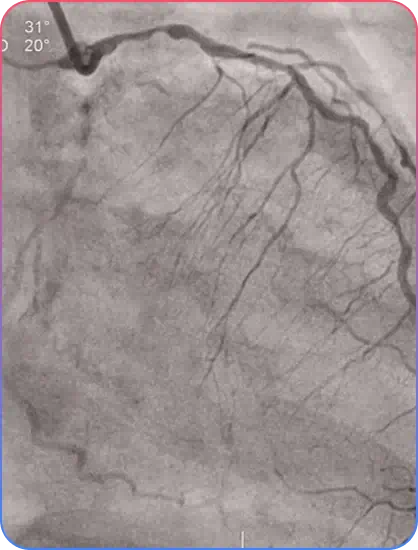
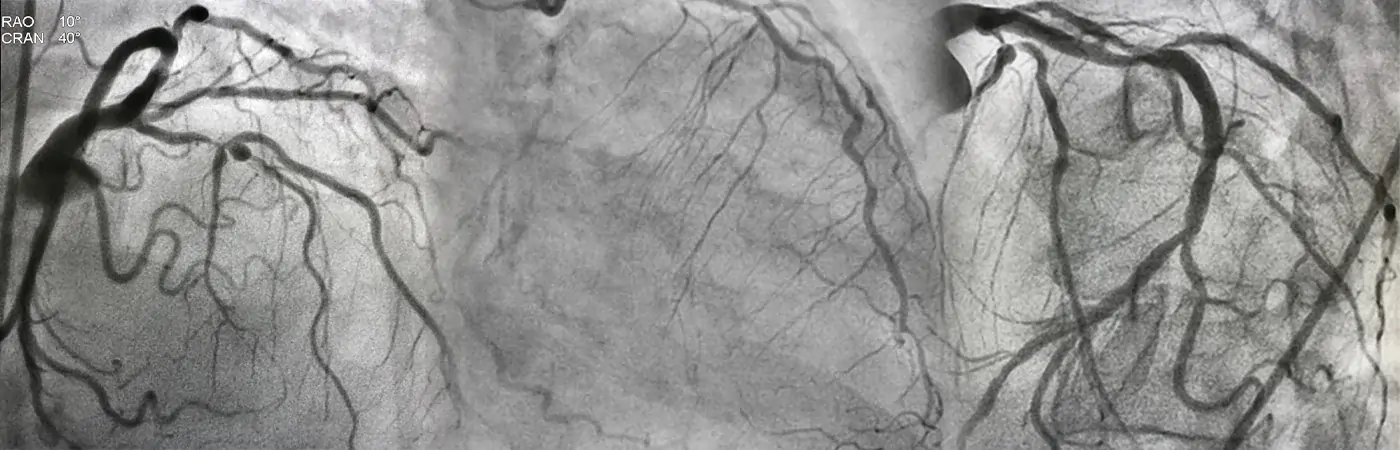
Bifurcation Lesion is a coronary artery narrowing occurring adjacent to, and/or involving, the origin of a significant side branch that you do not want to lose.

In simple terms, it is a lesion in parent vessel very close or involving a significant side branch.

Drug-eluting stents (DES) should be used for the treatment of bifurcation lesions, as treatment with bare metal stents (BMS) ha yield sub-optimal results.

What is a bifurcation blockage?

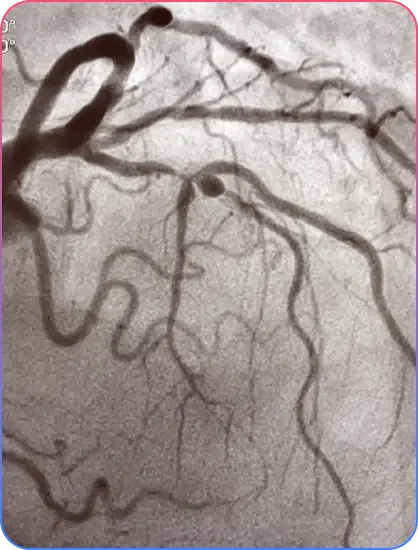
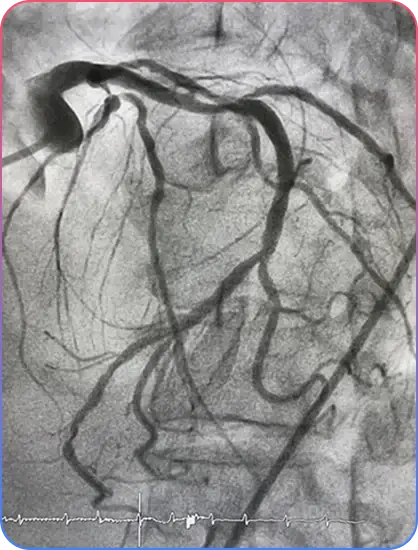
Stenoses, or narrowing, located in a main coronary artery and an adjoining side-branch vessel.

What is a bifurcated stent?

It is a novel platform designed to permit stenting in bifurcation lesions regardless of branch angulation or plaque location, in a short and simple procedure.
Bifurcation Blockage and Stent
Left Main Bifurcation Procedure

Types of Left Main Bifurcation

The left main is the largest bifurcation of the coronary tree and is therefore easier to access.

One-Stent Approach with Provisional Side Branch Stenting

  • Wire both the Main Branch (MB) and Side Branch (SB) with coronary guidewires and predilate the Main Branch.
  • Main branch stenting is sized to the distal main branch reference diameter with jailing of the SB wire.
  • Assessment of the angiographic result in the MB and SB.
  • Attempt to rewire the SB through the distal MB stent strut to enhance SB scaffolding. If successful, remove the jailed SB wire.
  • After the SB is rewired, dilate the SB.
  • Assessment of the angiographic result in the MB and SB.
  • If the SB result is suboptimal, perform final kissing inflation (FKI) or preferably sequential side-main-side (SMS) balloon dilatation on the SB and MB with a noncompliant balloon.
  • Assess the hemodynamic significance of the SB with fractional flow reserve (FFR).
  • SB stenting is recommended if the SB is ≥2.5 mm and has ≥75% stenosis, FFR ≤ 0.80, TIMI flow grade < 3, or plaque shift into the SB.
  • After SB stenting, repeat FKI or SMS.
Two-Stent Approach Techniques

Two-Stent Approach

  • Classic T-stent and Modified T-stent Technique: Techniques used for bifurcation lesion stenting based on branch anatomy and lesion characteristics.
  • TAP Technique:This technique is typically used with the provisional one-stent approach; however, it can also be used for the elective two-stent approach.
  • Culotte Technique:Allows complete lesion coverage and is preferably performed with stent platforms that have an open cell design.
  • Mini-crush and Step-crush Technique: The mini-crush technique reduces the number of overlapping stents in the proximal MB. In the step-crush technique, the protruded SB stent is crushed using a noncompliant MB balloon.
  • V-stent and SKS Techniques:Both techniques involve simultaneous implantation of the MB and SB stents. The difference lies in the amount of stent protrusion into the proximal MB. A small amount is seen in the V-stent technique, whereas significant protrusion occurs in the simultaneous kissing stent (SKS) technique.