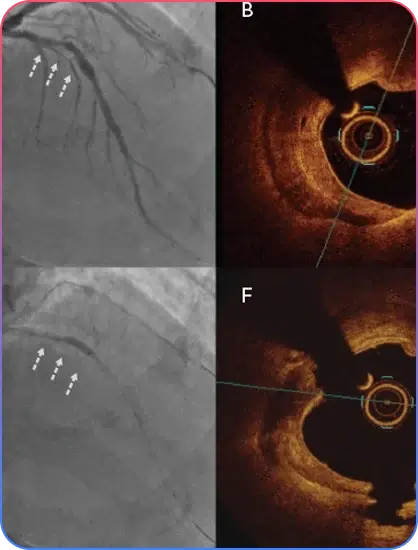
Bifurcation Lesions

Calcification

Calcification is a buildup of calcium in body tissue. The buildup can form hardened deposits in soft tissues, arteries, and other areas. Calcium is transported through the bloodstream. It’s also found in every cell. Some calcifications don’t cause painful symptoms, while others can lead to serious complications. Treatment depends on the location, severity, and underlying cause of the deposits.

According to the National Academy of Medicine, about 99 percent of your body’s calcium is in your teeth and bones. The other 1 percent is in the blood, muscles, fluid outside the cells, and other body tissues.

Arterial calcification

  • Artery calcification often starts developing after 40 years of age.
  • People with coronary artery disease commonly have calcification of the blood vessels.
  • About 90% of men and 67% of women over 70 years of age have coronary artery calcifications.
  • Calcification in the arteries supplying blood to the heart increases the risk of cardiovascular disease and can affect:
    • Blood flow through the heart
    • How the arteries contract and dilate to regulate blood flow
    • How well the arteries respond to changes in blood flow
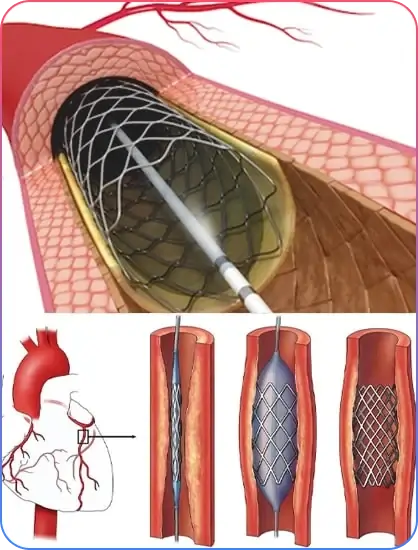
Left Main Bifurcation Procedure
Bifurcation Blockage and Stent

Artery calcification has no typical symptoms but may present as:
  • Chest pain (angina)
  • Heart attack
  • Aortic stenosis
  • Blocked blood vessels

  • Metabolic syndrome
  • High cholesterol
  • Tobacco use
  • High blood pressure
  • Chronic kidney disease
  • High baseline C-reactive protein levels